
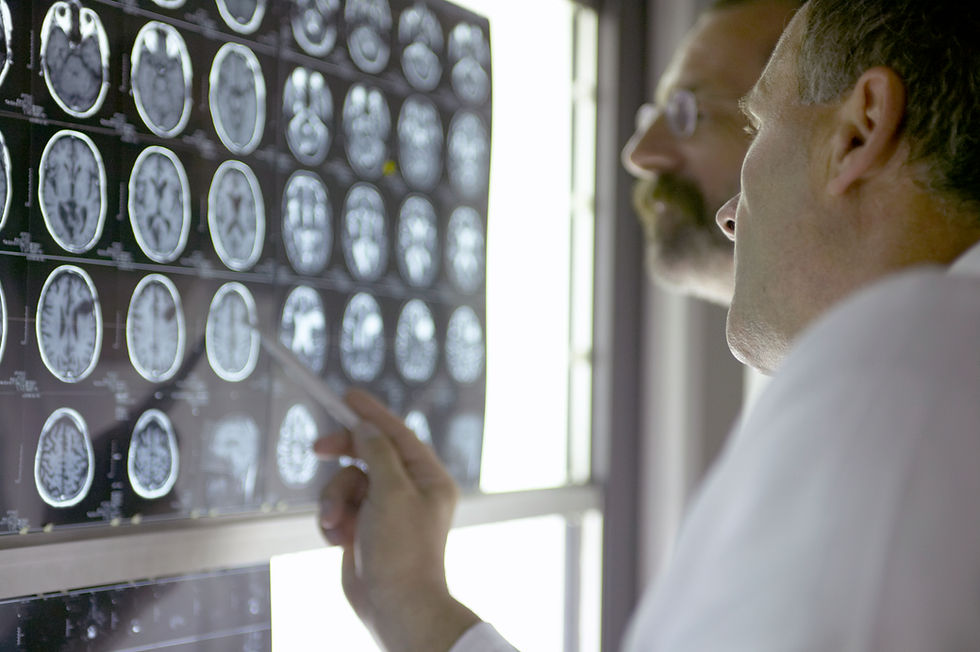
Welcome to DTI analysis portal and imaging archive
Quality Care You Can Trust
Our Diffusion Tensor Imaging Center invites you to become a part of our growing and supportive community. At DTI analysis portal and imaging archive, we see our patient and visitor as a part of the family—and family is always our top priority. Scroll down to read more about our services.
Our Services
At DTI analysis portal and imaging archive, we are your trusted partners in health. Our practices are dedicated to providing quality care by offering the highest level of service .
Our mission is to provide a platform for sharing, exploring, and analyzing DTI data from different sources and modalities. We aim to facilitate the dissemination and utilization of DTI data for scientific, educational, and clinical purposes. We also hope to inspire and support the development of new methods and techniques for DTI data processing and interpretation. Our website offers access of DTI data from various domain. We hope you enjoy using our website and find it useful for your projects and interests.

About Diffusion Tensor Imaging
Here We Are Providing Various Data Related With Diffusion Tensor Imaging. Diffusion Tensor Imaging (DTI) is an advanced magnetic resonance imaging (MRI) technique that provides detailed information about tissue microstructure such as fiber orientation, axonal density, and degree of myelination³. DTI is based on the measurement of the diffusion of water molecules in biological tissues, which is not random, but reflects interactions with many obstacles, such as macromolecules, fibers, and membranes².

DTI Procedure
DTI can estimate the axonal (white matter) organization of the brain by using anisotropic diffusion, which means that water molecules tend to diffuse more freely along the direction of axonal fascicles rather than across them¹. DTI can also generate 3D reconstruction images of neural tracts using fiber tractography, which is a technique that uses the direction of maximum diffusivity along the white-matter fibers to project them in the final image¹. DTI can also quantify the diffusion process by using parameters such as mean diffusivity (MD), fractional anisotropy (FA), axial diffusivity (AD), and radial diffusivity (RD)².DTI is an important technique for studying the diseases of the white matter of the brain as well as for other body tissues. DTI can reveal microscopic details about tissue architecture, either normal or in a diseased state, that are not visible on conventional MRI, CT or other imaging modalities⁵.

DIFFUSION TENSOR IMAGES
Here you can get DTI images

Why DTI Used
Various Diseases
DTI is an important technique for studying the diseases of the white matter of the brain as well as for other body tissues. DTI can reveal microscopic details about tissue architecture, either normal or in a diseased state, that are not visible on conventional MRI, CT or other imaging modalities⁵. For example, DTI can be used for:
- assessment of the deformation of white matter by tumors - deviation, infiltration, destruction of white matter¹
- delineation of the anatomy of immature brains¹
- presurgical planning¹
- Alzheimer disease - detection of early disease¹
- schizophrenia¹
- focal cortical dysplasia¹
- multiple sclerosis - plaque assessment¹
- early identification of musculoskeletal and peripheral nerve pathology²
DTI is a state-of-the art diagnostic tool that has many applications and advantages over traditional imaging techniques. It can provide valuable insights into the structure and function of the brain and other tissues by measuring the diffusion of water molecules. DTI is a powerful tool for understanding the normal and pathological processes that affect the tissue microstructure.
ADVANTAGES
-
DTI can visualize the white matter tracts in three dimensions, which can help in understanding the brain anatomy and function, as well as in planning neurosurgical procedures .
-
DTI can quantify the degree and direction of water diffusion in each voxel, which can be used to calculate various scalar metrics, such as fractional anisotropy (FA), mean diffusivity (MD), axial diffusivity (AD), and radial diffusivity (RD).. These metrics can reflect the microstructural properties of the tissue, such as the degree of myelination, axonal density, fiber orientation, and coherence
DTI can detect subtle changes in the white matter that may not be visible with conventional MRI techniques, such as T1, T2, or fMRI. DTI can reveal abnormalities in the white matter integrity and connectivity in various conditions, such as stroke, brain tumours , multiple sclerosis, Parkinson’s

FUTURE SCOPE OF DTI
The future scope of DTI is to improve the diagnosis, prognosis, and treatment of various neurological and psychiatric disorders. Some of the potential applications of DTI are:
1) Preoperative planning and mapping: DTI can help neurosurgeons to identify and preserve the eloquent white matter tracts that are Involved in motor, sensory, language, and cognitive functions during brain surgery. DTI can also help to assess the extent of tumour infiltration and resection .
2) Resting state functional MRI: DTI can be combined with functional MRI (fMRI), which measures the changes in blood oxygenation level dependent (BOLD) signal that reflect the neural activity in the brain. By correlating the DTI and fMRI data, researchers can investigate the relationship between the structural and functional connectivity of the brain networks .
3) Diffusion kurtosis Imaging: DTI can be extended to a more advanced technique called diffusion kurtosis imaging (DKI), which can measure the deviation of water diffusion from a Gaussian distribution. DKI can provide more information about the microstructural complexity and heterogeneity of the brain tissue, such as the presence of crossing fibers, axonal density, and myelination .
4) Machine learning: DTI can be integrated with machine learning (ML), which is a branch of artificial intelligence that can learn from data and make predictions. ML can help to analyze the large and complex DTI data sets and extract meaningful features and patterns. ML can also help to develop predictive models and biomarkers for various clinical outcomes, such as cognitive impairment, functional recovery, or survival .

DTI Data and Files
You can Use This Data for your research or Medical Purpose.
To Used The Data
This is your Custom Form section paragraph. Encourage your users to fill out all the sections before submitting their information.


DTI of a normal human without any disorders in relaxing condition
DTI Analysis
We Invite new patients to Upload Data Or Images (NIFTI Files). Our AI Is Trained With Artificial Neural Network And It's Detect The Specific Disease With The Data Given By The Visitor or Patient.

About Us
Who We Are
We are a team of 4 Enthusiastic Engineer's and Resercher from North-Easten Hill University, Shillong who are interested in DTI and it's untouched application and want to explore more about DTI and future development in this field in order to make people life more easier...
We are the Bio-Medical Enengineers
Sumit Kar
Rajkumar Deori
Elisha T Sangma
Paridisha Das
At DTI analysis portal and imaging archive, we’re committed to providing you with the most exceptional care in a compassionate and friendly atmosphere. We are a team of researchers, engineers, and enthusiasts who are passionate about Diffusion Tensor imaging (DTI) and its applications in various fields. Our mission is to provide a platform for sharing, exploring, and analyzing DTI data from different sources and modalities. We aim to facilitate the dissemination and utilization of DTI data for scientific, educational, and clinical purposes. We also hope to inspire and support the development of new methods and techniques for DTI data processing and interpretation.
Our website offers access to a large collection of DTI datasets from various domains, such as neuroscience, oncology, and more. These datasets are openly available to the research community and the general public, with proper attribution and citation. We also provide tools and resources for visualizing, manipulating, and analyzing DTI data online or offline. Additionally, we feature articles, tutorials, and news related to DTI data and its applications.
We welcome feedback, suggestions, and contributions from our users and collaborators. If you have any questions or comments, please feel free to contact us. We hope you enjoy using our website and find it useful for your projects and interests. Thank you for visiting us.